
InsightTechnical note
Why transformer oil matters, and when it should be changed
Engineering insightPower Tagun Engineering
Oil insulates, cools and quenches arcs inside a transformer. When it degrades the transformer does not slow down — it fails. Here is what to watch for.
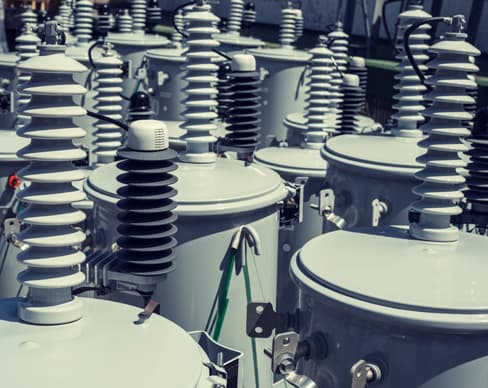
Oil insulates, cools and quenches arcs inside a transformer. When it degrades the transformer does not slow down — it fails. Here is what to watch for.
Transformer oil does three jobs at the same time. It insulates between the core, the windings and the tank; it carries away the heat those windings generate; and it quenches any arc that forms inside the tank. Remove the oil and a transformer does not run at reduced capacity — it is destroyed almost immediately.
Because all three jobs depend on the same fluid, oil condition is one of the clearest indicators of how much service life a transformer has left. Guidance is usually given as a fixed interval — replace at five years, or at ten — but the interval is a default, not a rule. The oil itself tells you when it needs attention.
Four signs matter. The oil darkens towards deep brown. Moisture content rises. Acidity rises. Dielectric strength falls. Any of these appearing means the oil should be tested properly and, if the results confirm it, changed without waiting for the calendar.
New oil is pale yellow and clear, with very low acidity and moisture. In service, heat, air and contact with catalytic materials drive chemical changes that progressively darken it, raise its acid content and increase how much water it holds. That progression is normal; leaving it unaddressed is not.
The consequence of running past that point is not gradual. As the oil loses dielectric performance, insulation resistance between conductors falls, and the fault that follows is a short circuit inside the tank — which usually means losing the transformer rather than repairing it. Testing oil is inexpensive. Replacing a transformer is not.
Continue exploring